Fresh Air, Empty Pockets: How Oxford Walkers Are Getting More from Their Boots Than Their Bank Accounts
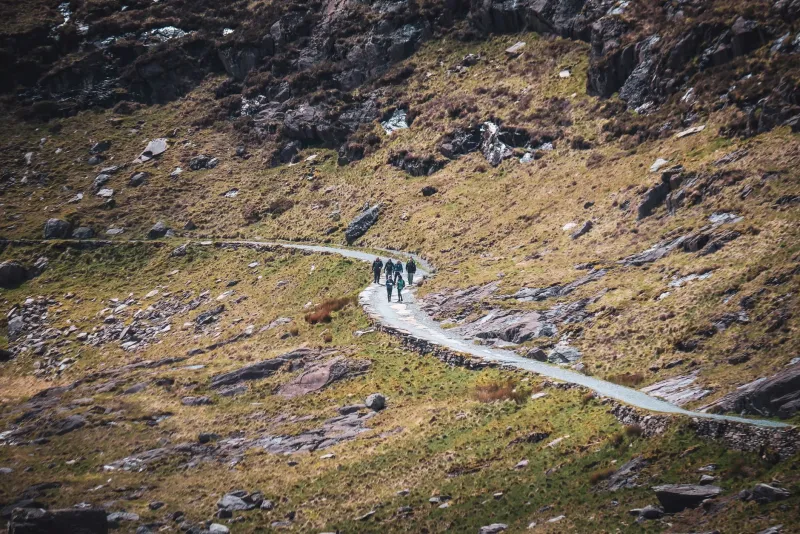
There's a gym somewhere in Oxford charging upwards of £50 a month for the privilege of walking on a treadmill. Meanwhile, about three miles east of the city centre, a group of Oxon Walkers 2030 members is crossing a stile into a sunlit meadow, completely free of charge, with flasks of home-brewed tea and smiles wider than the Thames Path itself.
The contrast isn't lost on any of them.
"I cancelled my gym membership in February 2023 and haven't looked back," says Priya, a 38-year-old nurse from Headington who joined the group earlier that year. "I was paying £54 a month and going maybe twice a week, mostly just to use the treadmill. Now I'm outside three or four times a week, I'm fitter than I've ever been, and the only thing I'm spending money on is the occasional new pair of socks."
Priya isn't alone. Across the club, members are increasingly conscious of the financial dimension to their walking habit — and discovering that it compares very favourably to most commercial fitness alternatives.
The True Cost of Getting Fit
Britain's fitness industry is worth billions, and it's built partly on the idea that exercise requires investment. Gym memberships, fitness classes, personal trainers, app subscriptions, boutique spin studios — the costs add up fast. For many people, that financial pressure becomes its own barrier. You sign up, feel guilty when you don't go, and eventually cancel, only to repeat the cycle.
Walking short-circuits all of that. The footpaths are public. The countryside doesn't charge admission. And while there's certainly money you can spend on kit, most experienced walkers will tell you it's far from necessary — at least not at the start.
"I did my first six months in a pair of old trainers and a waterproof I'd had since university," admits Dan, a 45-year-old secondary school teacher from Cowley. "Nobody cared. The paths didn't care. The only thing that mattered was showing up."
Sharing, Swapping and Second-Hand Kit
For members who do want to invest in proper gear over time, the club has developed a quietly brilliant informal economy. A WhatsApp thread — affectionately known as the "kit cupboard" — allows members to lend, swap or pass on equipment they're no longer using.
Last autumn, three members planning their first overnight walking trip kitted themselves out almost entirely through the group. Borrowed rucksacks, a loaned pair of walking poles, and a sleeping mat that had been sitting in someone's loft since 2019. Total additional spend: around £12 on some blister plasters and a new water bottle.
"It's one of those things that sounds small but actually makes a real difference," says Fatima, who coordinates the thread. "Someone buys a pair of gaiters, uses them twice, and they'd otherwise just sit in a cupboard. Now they're doing 20,000 steps a week on someone else's feet."
Beyond the club itself, charity shops — particularly those near outdoor-focused areas like the Covered Market or along the Cowley Road — regularly stock walking gear at a fraction of the retail price. Vinted and eBay have become go-to resources for members wanting branded gear without the brand-name price tag.
Free Routes, Free Resources
One of the most liberating realisations for new members is just how much walking infrastructure already exists and costs absolutely nothing to use. Oxfordshire's public rights of way network stretches for thousands of miles, much of it unmarked on mainstream fitness apps but well-documented by Ordnance Survey and local walking groups.
The club has been building its own library of free downloadable routes — everything from a gentle 4-mile loop through the water meadows south of Abingdon to a more ambitious 14-mile ridge walk above Chipping Norton. These are written by members, tested by members, and shared freely on the website. No paywall, no premium tier.
"We made a deliberate decision early on that route information should never be behind a subscription," says one of the club's founding members. "Walking is already the most democratic sport there is. We didn't want to put up financial barriers where there don't need to be any."
For members venturing further afield — into the Cotswolds, the Chilterns, or beyond — the Ramblers Association website and the Long Distance Walkers Association both offer extensive free resources. National rail often makes group day trips surprisingly affordable, particularly with a railcard.
Making a Day of It Without Spending Much
One area where costs can creep up is food and drink on longer walks. A café stop here, a pub lunch there — it adds up, especially on a regular basis. Club members have developed a fairly pragmatic approach.
"We do a café stop maybe once a month as a treat," says Marcus, who walks with the Tuesday morning group. "The rest of the time, everyone brings their own. You'd be amazed what a good homemade sandwich and a thermos of coffee does for morale at the halfway point."
The club's monthly potluck walks — where everyone brings something to share — have become a favourite event on the calendar, partly because they're genuinely delicious, and partly because they cost almost nothing. A bag of sausage rolls, some flapjack, a wedge of cheese. Simpler and somehow more satisfying than any café menu.
For those driving to trailheads, the club's lift-share system means fuel costs are split between three or four people, making even more distant starting points financially viable. A Saturday morning drive out to the Ridgeway near Wantage, shared between four members, costs each person less than a couple of quid.
What You Actually Need to Get Started
If you're new to walking and wondering what the bare minimum looks like, experienced club members suggest keeping it simple:
- Comfortable, supportive footwear — doesn't have to be specialist walking boots, especially for shorter routes. Sturdy trainers work fine.
- A waterproof layer — any waterproof jacket will do. Oxfordshire weather is unpredictable enough that you'll be glad you have it.
- Water and a snack — a refillable bottle and something in your pocket. That's genuinely all you need for a few hours out.
- A downloaded map or route — the OS Maps app has a free tier, and the club's own routes are freely available on the website.
Everything else — the merino base layers, the GPS watches, the trekking poles — is optional. Nice, sometimes, but optional.
The Bigger Picture
There's something quietly radical about a community that's built a rich, active social life almost entirely outside the commercial fitness ecosystem. No membership fees, no branded merchandise, no influencer partnerships. Just people, paths, and the occasional shared biscuit.
For many Oxon Walkers 2030 members, the financial freedom is part of what makes the habit sustainable. When exercise doesn't cost you anything, there's no sunk cost fallacy, no guilt about a wasted subscription. You go when you can, you enjoy it, and you come back.
"It's the one thing in my life that I don't have to budget for," says Priya, lacing up before a Wednesday evening walk. "And somehow it's the thing I look forward to most."
Some of the best things really are free. The Oxfordshire countryside, it turns out, is one of them.