Forget Willpower: How Oxford Walkers Are Using Commitment Pacts to Actually Get Outside This Year
The Resolution That Never Quite Happens
You know the drill. Somewhere between Christmas pudding and the first cold Monday of January, you decide this is the year. You're going to walk more, get fitter, spend less time on the sofa. You might even dig out a decent pair of boots. Then February arrives, the mornings stay dark, and somehow the whole thing quietly dissolves.
It's not a character flaw. It's just how resolutions tend to work — or rather, don't. Research into behaviour change has consistently shown that vague personal commitments, made in private, are among the least effective ways to actually change what you do. And yet every January, millions of us keep trying the same approach and expecting different results.
A growing number of Oxford Walkers 2030 members have decided to try something different. Instead of making promises to themselves, they're making them to each other.
What a Walking Contract Actually Looks Like
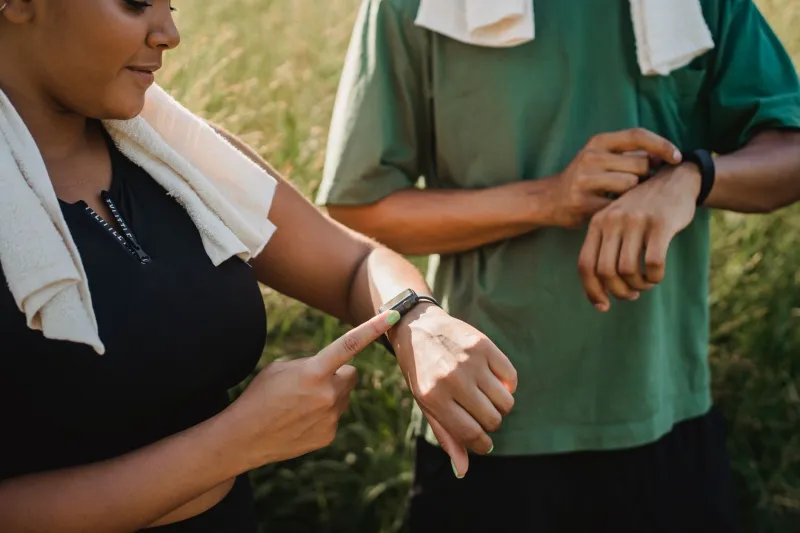
The idea is simpler than it sounds. A walking contract — sometimes called a commitment pact or accountability pledge — is just an agreement between two or more people that spells out what each person is committing to, how often, and what happens if someone drops the ball.
It doesn't need to be formal. Some members write theirs on the back of a postcard. Others use a shared note on their phones. A few have gone full stationery-nerd and printed them out with signatures. The format matters far less than the act of making the commitment visible and mutual.
Sarah, who joined Oxon Walkers 2030 in early 2024 after years of stop-start solo attempts, describes hers as a "ridiculously simple" arrangement with her neighbour. "We agreed to walk together every Saturday morning, come what may. If one of us cancels, we owe the other a coffee. It sounds daft, but that tiny bit of social pressure changed everything. I haven't missed a Saturday since March."
That social dimension is precisely the point. When you're only accountable to yourself, it's easy to negotiate yourself out of a walk. When someone else is waiting at the end of your road, the calculation changes entirely.
The Psychology Behind Why This Works
Behavioural economists have a term for this kind of arrangement: a commitment device. It's a mechanism that locks in a future behaviour by raising the cost of backing out — whether that's financial, social, or reputational.
The classic example is the gym buddy. Studies have repeatedly found that people who exercise with a partner attend more frequently and stick with it longer than those who go alone. Walking partnerships work on exactly the same principle, with the added bonus that walking is far more accessible, cheaper, and frankly more pleasant on a grey Oxford morning than most gym alternatives.
What makes walking contracts particularly effective is that they combine commitment with community. You're not just obliged to show up — you actually want to, because the walk itself becomes a social event. The miles are almost incidental.
Dr. James Larter, a behavioural psychology researcher based in Oxford, puts it this way: "Human beings are wired to honour commitments made to people they care about. We'll break promises to ourselves without a second thought, but letting down a friend feels genuinely costly. Walking groups exploit that instinct in the best possible way."
Real Pledges from Real Members
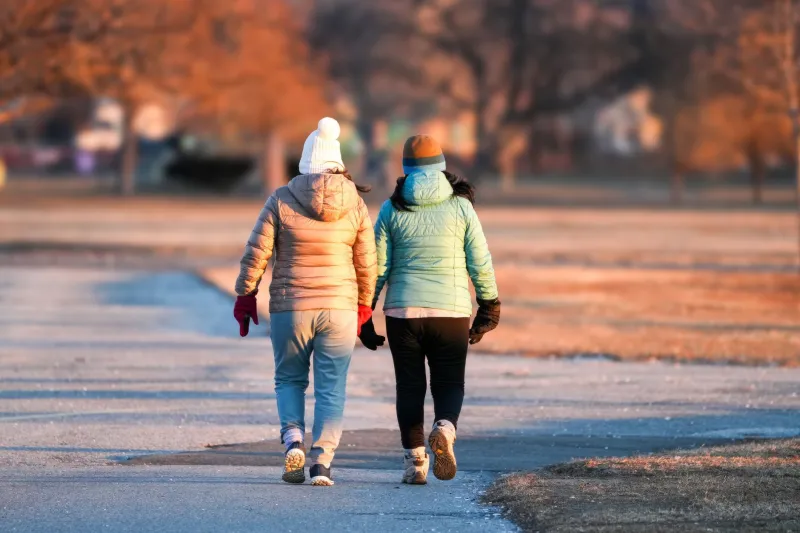
Across the Oxon Walkers 2030 community, these pacts take all sorts of shapes. Some are one-to-one arrangements between friends or colleagues. Others are small group pledges, where three or four people agree to a monthly longer walk together — perhaps out to Boars Hill, along the Cherwell, or further afield towards the Cotswold edge.
Tom and Marcus, who met through the club's Thursday evening walks, made a pledge last January to complete twelve different circular routes across Oxfordshire over the course of the year — one per month. "We wrote them down, stuck the list on the fridge, and told our partners what we were doing," Tom explains. "That last bit was crucial. Once you've told people, it becomes real."
They completed eleven of the twelve routes. The twelfth got rescheduled twice due to a family emergency but was finished in early February — a month late, but finished nonetheless. "Without the contract, we'd have quietly given up after the first postponement," Marcus admits.
How to Write Your Own Walking Pledge
If this sounds like something worth trying, here's a straightforward framework to get you started. You don't need anything fancy — just clarity and someone else to hold you to it.
Be specific about the what. Vague commitments fail because they're too easy to reinterpret. "Walk more" means nothing. "Walk at least twice a week, minimum 40 minutes each time" is something you can actually measure.
Name your walking partner or group. The pledge only works if someone else is involved. Reach out to a friend, a neighbour, or a fellow Oxon Walkers 2030 member. Most people are more receptive to this kind of invitation than you'd expect.
Set a time horizon. A six-month commitment feels manageable and gives you enough runway to actually build a habit. Review and renew at the end of the period.
Agree on a gentle consequence. Nothing punitive — just something that makes a cancellation feel mildly costly. A coffee, a donation to a charity you both care about, or simply agreeing to reschedule within the same week.
Write it down and share it. Even if it's just a text message exchange where both of you say "I'm in," making it visible matters. Some members post their pledges in the Oxon Walkers 2030 community forum, which adds another layer of gentle accountability.
Beyond January: Building Something That Lasts
The real goal here isn't to survive January. It's to still be walking come October, when the leaves are turning along the Thames Path and the air has that particular crispness that makes every step feel worthwhile.
Resolutions focus on the start. Contracts focus on the continuation. That shift in emphasis — from motivation to structure — is what tends to make the difference between a walking habit that sticks and one that fades with the winter frost.
Oxford's walking community has always understood that getting outside is easier together. The commitment pact is just a way of making that truth a little more official — and a little harder to wriggle out of when the alarm goes off on a damp Saturday morning.
So find your person, write your pledge, and get your boots by the door. The Cotswolds aren't going anywhere — but January is moving faster than you think.