From Grandparent to Grandchild: The Quiet Joy of Walking Oxford Together
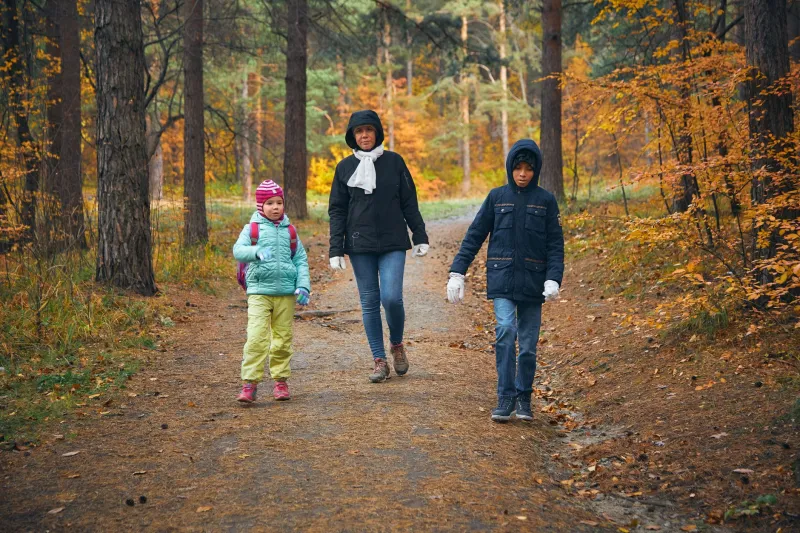
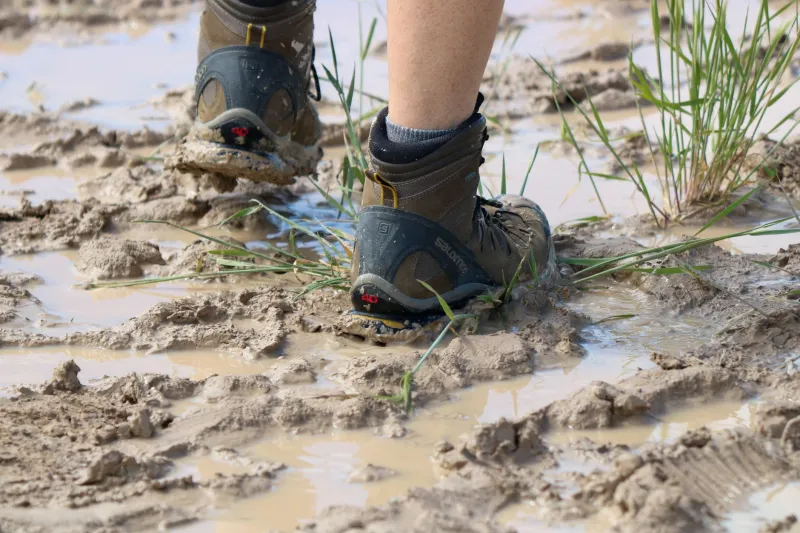
There's a particular kind of photograph that turns up regularly in the Oxon Walkers 2030 community — not the heroic summit shot or the gleaming new trail shoe, but something altogether more ordinary. A child in wellies, face turned upward at something in a tree. A grandparent pointing at a heron on the riverbank. Three generations strung out along a muddy path, moving at three completely different speeds, and all of them perfectly happy about it.
Multigenerational walking is one of those things that doesn't get talked about much, perhaps because it doesn't feel like an achievement in the traditional sense. Nobody's training for anything. Nobody's hitting a personal best. And yet, in its quiet way, it might be doing more good than almost anything else the Oxford walking community gets up to.
Why It Works When So Much Else Doesn't
Family fitness is genuinely difficult to get right. The things that challenge a seven-year-old on a walk are completely different from what challenges a seventy-year-old, and both are different again from a parent in their late thirties trying to keep everyone happy while also getting some actual exercise. It's a logistical puzzle with a lot of moving parts.
What walking does, almost uniquely, is allow each person to participate at their own level without anyone feeling left out or held back. A child can sprint ahead to the next gate, investigate a puddle, and double back — effectively covering twice the distance of the adults — while grandparents set a comfortable pace and the parents drift between the two. Everyone's on the same path, having the same experience, and nobody needs to modify what they're doing to accommodate anyone else.
Helen Marsh, 68, from Abingdon, has been walking the Oxfordshire countryside with her grandchildren for the past four years. "My daughter was worried the children would find it boring," she says. "But they never do. There's always something. A beetle, a weird-shaped cloud, a lock gate opening. Children notice everything when they're not looking at a screen."
Her grandson Theo, now nine, has apparently developed strong opinions about which biscuits are acceptable at a halfway stop. (Hobnobs yes, Rich Tea a firm no.) These are the details that stick.
Routes That Work for Everyone
The key to a successful multigenerational walk around Oxford is choosing a route that offers variety without being demanding. Distance matters less than terrain and pace — a flat three-mile route with interesting things to look at will almost always beat a more dramatic five-mile route with tricky stiles or steep descents.
A few routes that the Oxon Walkers 2030 community has found particularly well-suited to mixed-age groups:
The Thames Path between Oxford and Sandford-on-Thames: A largely flat, well-surfaced path with river views throughout. The lock at Sandford makes for a brilliant halfway stop — children are fascinated by the mechanism, and there are benches for anyone who needs a sit-down. The full route is around four miles return, but it's easy to turn back at any point.
Blenheim Park circular: The formal grounds and parkland around Blenheim Palace are genuinely accessible for pushchairs and mobility aids, and the landscape is spectacular enough to hold the attention of every age group. There's a café for the essential halfway cake. Entry fees apply but family tickets represent reasonable value for a half-day out.
The Iffley Meadows loop: A short, flat circuit through one of Oxfordshire's finest wildflower meadows. In spring, the snake's head fritillaries are extraordinary, and identifying flowers together is a lovely activity for children and grandparents alike. This route is genuinely manageable for anyone who finds longer walks difficult.
Wytham Woods: Owned by the University of Oxford, these ancient woods offer a wilder feel without being remote. The paths are well-maintained, there's shade in summer, and the woodland atmosphere tends to quieten even the most energetic children into something approaching wonder.
Accessibility Without Apology
It's worth saying clearly: multigenerational walking works best when everyone is honest about what they can and can't manage, and when nobody feels embarrassed about their limitations. Older walkers sometimes worry about slowing the group down. Parents sometimes feel guilty about cutting a walk short when a child hits a wall. Children sometimes feel self-conscious about needing a carry.
All of this is completely unnecessary, but it's worth naming because it can quietly undermine what should be a joyful experience.
A few things that help in practice:
Set realistic expectations before you go. A two-mile walk that everyone enjoys is infinitely better than a five-mile walk that ends in tears and a sulk. Build in a buffer — if you plan for two miles and the group is flying, you can always extend. The reverse is much harder to manage.
Pack more food than you think you need. This is not a metaphor. Children and older adults both need regular fuel, and a well-timed snack can rescue a walk that's starting to wobble. Flapjacks, fruit, and a good flask of tea cover most eventualities.
Let the slowest person set the pace. This sounds obvious but often isn't practised. The walker who needs to move slowly is usually also the one who notices the most — the interesting fungi, the old milestone, the view that everyone else walked past. Slowing down is almost always worthwhile.
Give children a role. Map-reading (even if it's mostly decorative), spotting landmarks, counting bridges, leading the group between waypoints — children who feel responsible for something are children who are engaged. It transforms a walk from something happening to them into something they're doing.
What It's Building
The longer-term value of multigenerational walking is something the Oxon Walkers 2030 community thinks about quite a lot. Instilling a love of walking in children — not as exercise or as something virtuous, but simply as a pleasurable way to spend time — is one of the most lasting gifts that can be passed between generations.
Helen's grandchildren will almost certainly not remember the specific routes they've walked with her. But they will remember that walking was something their family did together, something that felt natural and enjoyable, something associated with good conversations and interesting things and the right biscuits at the right moment.
That's a habit that tends to last a lifetime. And in a community working towards a healthier, more active Oxford by 2030, there are few things more valuable than a generation of children who already know what it feels like to love being outdoors.
Put your boots on. Bring the whole family. The path will meet you wherever you are.