Ten Years, One Pair of Boots: What Oxford Walkers Know About Making Gear Last
Susan has walked over three thousand miles in the same pair of boots. She knows because she started keeping a log in 2015, partly out of curiosity and partly because she wanted to prove a point to herself. The boots — a pair of Scarpa GTX trail shoes she bought from a shop in Summertown — have been resoled twice, re-waterproofed more times than she can count, and spent a memorable weekend drying out beside a B&B radiator in the Brecon Beacons after a river crossing went slightly wrong.
"People think I'm being eccentric," she says, laughing. "But I just genuinely love these boots. They fit my feet perfectly. Why would I replace them?"
Susan isn't alone. Across Oxon Walkers 2030, there's a growing cohort of members who've quietly opted out of the cycle of buying, wearing out, and replacing — and who've discovered that proper kit maintenance is both more economical and more satisfying than the alternative.
The Problem with the Throwaway Habit
The outdoor gear industry, for all its sustainability branding, produces an enormous amount of waste. A pair of walking boots typically contains multiple types of synthetic materials, rubber compounds, and adhesives that make them almost impossible to recycle at end of life. When you throw them away after two seasons, that's not just money lost — it's a small but real environmental cost.
Fast fashion has crept into outdoor retail too. Budget boots flood the market at price points that make repair seem economically irrational. Why spend £40 getting a pair resoled when you can buy a new pair for £60? The maths appears to work — until you factor in that the £60 pair will likely last a third as long as a quality boot that's been properly maintained, and that the resoled pair already fits your foot in ways a new one won't for months.
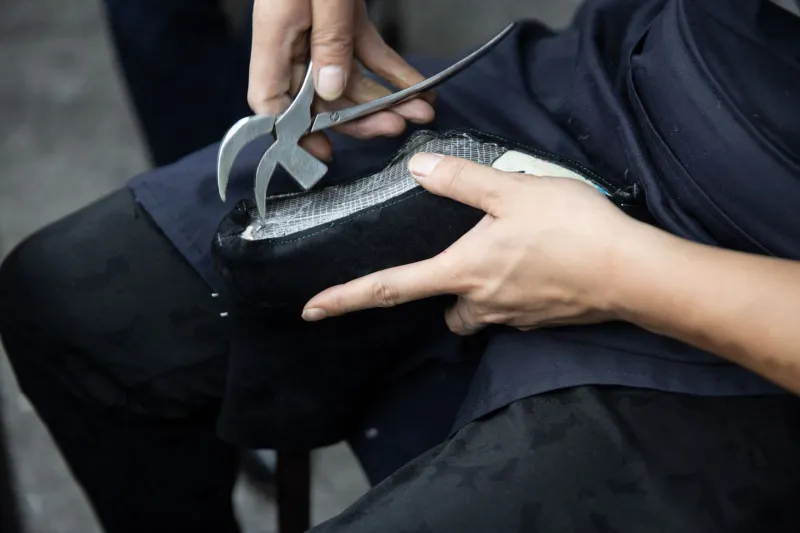
Mark, who runs a small cobbling and repair service from a workshop near Cowley, has noticed the shift. "Five years ago, most of what I did was dress shoes and school shoes. Now I'd say a third of my work is walking boots and trail shoes. People are bringing in boots worth £150, £200 — good boots — and asking me to resole them rather than bin them. That's changed."
What Proper Boot Care Actually Looks Like
The good news is that most basic maintenance requires nothing more than a bit of time, some inexpensive products, and the willingness to treat your boots as an investment rather than a consumable.
After every walk: Knock off the worst of the mud while it's still wet — dried mud is harder to remove and can crack leather. Loosen the laces and pull the tongue forward to let air circulate inside. If you've been walking in wet conditions, stuff the boots loosely with newspaper (not near direct heat) to absorb moisture and help them keep their shape.
Weekly, or after muddy outings: Wash with a soft brush and lukewarm water. Avoid detergents, which strip natural oils from leather and can damage synthetic uppers. Let them dry naturally, away from radiators and direct sunlight — heat is the enemy of both leather and the glues that hold a boot together.
Monthly, or seasonally: Apply a leather conditioner or appropriate treatment for your boot's upper material. For waterproof boots, reproof with a DWR (durable water repellent) spray or wax once you notice water no longer beading on the surface. This is the step most people skip, and it's the one that makes the biggest difference to how long a boot stays comfortable in wet conditions.
When the soles wear: This is where most walkers give up, but it's worth knowing that many quality boots — particularly those with Vibram or similar rubber soles — can be resoled professionally for between £35 and £60. For boots that originally cost £150 or more, this is almost always worthwhile. The key is not to wait until the sole has completely delaminated; a cobbler can work with worn rubber, but they can't bond a sole that's already peeling away from the upper.
The Right Boot in the First Place
Of course, none of this works if you start with poor-quality footwear. Several long-standing Oxon Walkers members were emphatic on this point: the single best thing you can do for your gear budget is buy well once, rather than cheaply repeatedly.
Dave, who joined the group in 2019 and has since completed both the Ridgeway and the Cotswold Way, spent a long time in budget boots before making the switch. "I went through three pairs in two years. Wet feet, blisters, soles separating halfway through a walk. Eventually I spent properly on a pair of Meindls and just... never looked back. They're still going. I've had them four years."
The consensus among experienced members tends toward mid-weight leather or leather-hybrid boots for most British walking conditions — lighter than traditional mountain boots, but with enough structure and waterproofing to handle the mud and wet that define most Oxfordshire walking from October through April. Brands like Meindl, Scarpa, Lowa, and Hanwag come up repeatedly, not because they're fashionable but because they're built to be repaired.
A Repair Culture Worth Nurturing
There's something quietly radical about choosing to fix something rather than replace it. It runs against the grain of a retail economy built on obsolescence, and it requires a slightly different relationship with your possessions — one that involves attention and care rather than just consumption.
For many Oxon Walkers members, that relationship extends beyond boots to the rest of their kit. Waterproof jackets can be reproofed. Rucksack buckles can be replaced. Trekking pole baskets are available as spare parts. None of this is difficult or expensive, but it does require the small shift of deciding that something is worth keeping.
Susan is already thinking about what comes after her Scarpas, when the uppers eventually give out beyond what any cobbler can fix. "I'll probably buy the same boot again," she says. "Or something very similar. And then I'll look after it the same way. It's not complicated, is it?"
No. It really isn't.