What the Hedgerows Know: Reading Oxford's Seasons Without a Screen
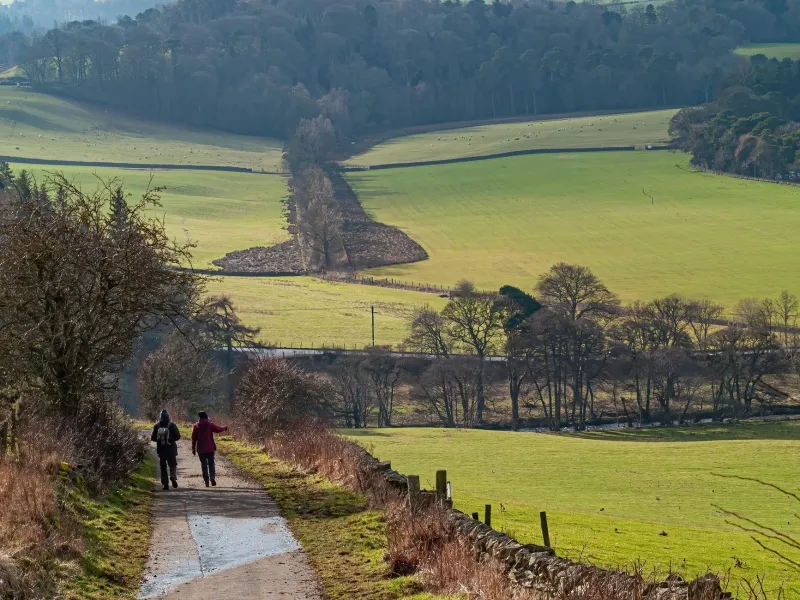
There's a particular kind of walker you'll sometimes meet on the Ridgeway or along the Cherwell valley — the sort who pauses mid-stride not to check their phone, but to study a clump of lichen on a dry-stone wall, or tilt their head at a sound coming from somewhere above the tree line. They're not lost. They're reading.
Developing that kind of attentiveness to the Oxford countryside is less about expertise and more about habit. You don't need a degree in ecology or a shelf full of field guides. You just need to show up regularly and start paying attention. Over time, the landscape tells you everything — when to expect the paths to firm up after winter, which routes will be swamped with nettles by July, and where the best light will fall on a November afternoon.
This is the almanac that no app will ever quite replicate.
January and February: The Bare-Bones Months
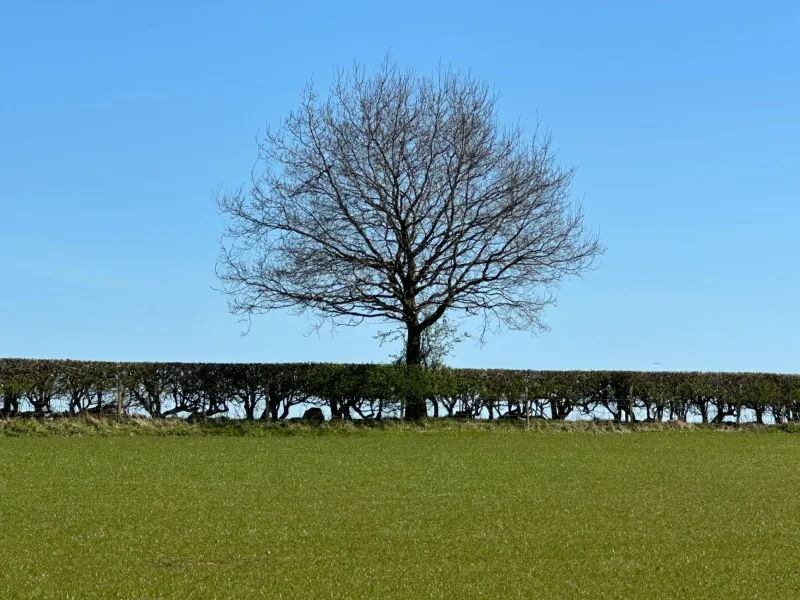
Winter strips everything back, and that's actually a gift for walkers. Hedgerows that are impenetrable from May onwards become open lattices you can see straight through, revealing field boundaries, old gate posts, and the occasional forgotten stile. It's the best time of year to understand the bones of a landscape.
On limestone walls around the Cotswold fringe — easily reached on a day walk from Oxford — pay attention to lichen. The grey-green crusty varieties (crustose lichens, if you want the technical term) thrive on north-facing stone faces where moisture lingers. Finding them concentrated on one side of a wall isn't just pretty; it's a rough compass. Not infallible, but useful when mist comes down and you're not sure which way you've turned.
Bird activity is another quiet guide. Redwings and fieldfares — winter thrushes arriving from Scandinavia — flock to berry-heavy hedgerows from late October through to March. If you're walking near Otmoor or along the Evenlode and you hear a thin, reedy contact call overhead, look up. The direction of their movement often tracks the weather fronts coming in from the west. When they're moving restlessly, unsettled weather usually follows within a day or two.
March and April: The False Starts
Spring in Oxfordshire is rarely a clean arrival. It tends to come in waves — a warm week in early March followed by a hard frost, then proper warmth again by mid-April. Experienced walkers here have learned not to trust the calendar but to watch the blackthorn instead.
Blackthorn blossoms before its leaves appear, usually in late February or March, creating those sudden white explosions in otherwise bare hedgerows. Folklore calls the cold snap that often follows "blackthorn winter," and it's remarkably consistent. If you're planning a longer day walk and the blackthorn is just opening, pack an extra layer.
By April, wild garlic carpets the shadier sections of the Thames Path near Iffley and along the Cherwell. Its scent, long before you see the white flowers, is a reliable sign that the ground beneath the trees has warmed enough to make those paths genuinely pleasant again after the winter muddiness.
May and June: Peak Reading
This is when the countryside becomes almost overwhelming in its signals, and the trick is learning to filter rather than absorb everything at once.
Swifts are the headline act. They arrive in Oxford — and you'll hear them before you see them, screaming in low arcs over Jericho and the water meadows — usually around the first week of May. Their arrival is one of the most reliable markers in the walker's year. When the swifts are back, the evenings are long enough for an after-work walk without a head torch, and the footpaths through Port Meadow are reliably dry underfoot.
For those walking the higher ground around the Chilterns or up onto White Horse Hill, watch the grasses. When the meadow grasses begin to seed and the air above them shimmers with pollen on warm afternoons, it's a sign that the ground has fully dried out after spring — and that the chalk paths will hold firm until at least September.
July and August: Reading the Heat
Summer walking in Oxfordshire requires a different kind of attention — less about navigation and more about timing. The landscape in July is dense and full, which means familiar paths can feel surprisingly different. Sight lines close in. Paths through tall vegetation become tunnels.
Early mornings are the local walker's answer to the summer heat problem. Dew on grass and cobwebs tells you roughly how still the night was. A heavy dew on a calm morning usually means the day will be clear and warm. It's the kind of detail that feels trivial until you've planned a long walk around it a few times and found it holds up.
Along the Thames, look for the flowering of meadowsweet — that creamy, frothy plant with an almost coconut scent — as a sign that you're in peak summer. It's also a useful indicator of damp ground ahead, since it favours wet meadows and riverbanks. If it's dense along a path edge, expect boggy ground underfoot regardless of how dry the summer has been.
September and October: The Clarity Returns
Many experienced Oxford walkers will tell you that autumn is when the countryside becomes readable again after the lush opacity of summer. The light changes first — it goes golden and low, stretching shadows across fields in a way that actually helps you read the contours of the land beneath your feet.
Migrating birds move through in waves. Hirundines — swallows, house martins, sand martins — gather on wires and rooftops through September before heading south. Their absence, usually complete by mid-October, is as reliable a seasonal marker as any.
On the ground, look to the fungi. Waxcaps in ancient grassland, shaggy ink caps along path edges, and the vivid fly agaric beneath birch trees in places like Shotover Country Park all appear in the weeks after the first autumn rains. Their presence signals that the soil temperature has dropped enough for ground conditions to shift — paths will begin to hold water again, and the firmer summer surfaces will start softening.
Building Your Own Walking Calendar
The point of all this isn't to turn every walk into a nature study class. It's to give yourself a richer relationship with the places you're already moving through. When you start noticing the blackthorn bloom or listening for swifts, the countryside stops being a backdrop and becomes something you're genuinely in conversation with.
Keep a simple notebook — or even just a note in your phone — of what you observe on each walk and when. After a couple of years, you'll have your own almanac, built from the specific routes you walk and the particular patches of Oxfordshire you know. That's worth more than any guidebook, because it's yours.
And when someone on a group walk asks why you've just stopped to look at a wall, you'll have a proper answer for them.