One Goal, Five Years, Zero Excuses: How the 2030 Challenge Is Turning Oxford Strollers into Serious Hikers
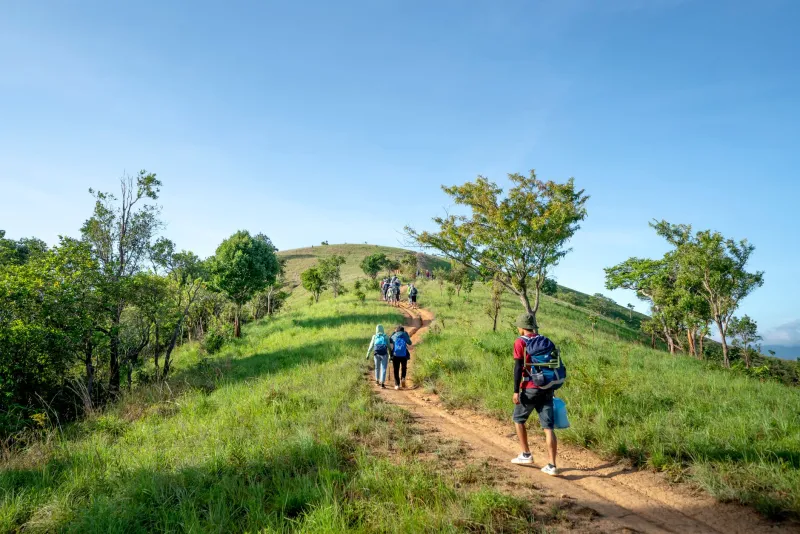
There's a particular kind of conversation that happens on Sunday mornings at the Oxon Walkers 2030 meetup point near Folly Bridge. Someone mentions a route they've been eyeing up — maybe the Ridgeway, maybe a circuit in the Brecon Beacons — and instead of the usual polite nodding followed by nothing, people actually pull out their phones and start checking dates. That shift, small as it sounds, is the whole story.
The 2030 vision has always been about more than racking up miles. But somewhere along the way, having a shared deadline attached to something as personal as fitness has created a strange and brilliant kind of accountability. Members who joined the group for a gentle Sunday amble are now talking about elevation gain. Quietly, without much fanfare, Oxford is producing a generation of walkers who genuinely mean it.
From the Sofa, Honestly
Sarah, 41, a secondary school administrator from Headington, is refreshingly candid about where she started. "I joined because my GP said I needed to move more and a friend said this lot were friendly," she admits, laughing. "My first walk was four miles along the Thames and I was done in. Genuinely done in."
That was February 2023. By last autumn, Sarah had completed the full Oxfordshire Way — a 65-mile route from Bourton-on-the-Water to Henley-on-Thames — split across several weekends. She didn't do it in one go, and she's the first to say that. "Some people make it sound like you have to do these epic things all at once. I just kept going back and doing the next bit. The 2030 goal gave me a reason to keep booking the next weekend rather than letting it drift."
That phrase — a reason to keep booking — comes up repeatedly when you talk to members about what the challenge actually does for them psychologically. It's not about the destination so much as it is about maintaining forward momentum when life, weather, and sheer fatigue conspire to make the sofa more appealing.
The Numbers That Change You
Marcus, 55, a retired civil servant from Jericho, approaches the challenge with the kind of methodical enthusiasm you might expect from someone who spent decades managing spreadsheets. He tracks his cumulative elevation gain in a notebook — an actual paper notebook, he's keen to stress — and has set himself a target of 20,000 metres of ascent by 2030.
"I know it sounds bonkers," he says, "but I worked out that if I do two decent hill walks a month, I'll get there comfortably. The number isn't really the point. The point is that I now plan walks instead of just going on them."
This distinction between planning and going is one that sports psychologists would recognise immediately. Goal-setting research consistently shows that attaching a specific, measurable target to a behaviour dramatically increases follow-through — not because people are suddenly more disciplined, but because the decision-making burden is reduced. Marcus doesn't have to decide whether to go walking this weekend. He's already decided. He just has to decide where.
For Marcus, the shift has been physical as much as mental. "I've lost a stone and a half. My resting heart rate has dropped. My knees, which I thought were finished, have actually got stronger because I've been building up properly rather than overdoing it and stopping for months."
When Setbacks Become Part of the Story
Not every member's trajectory has been a tidy upward curve. Priya, 38, a GP based in Cowley, had a stress fracture in her foot in the summer of 2024 that sidelined her for nearly four months. For someone who had been building steadily towards a Dartmoor traverse, the timing felt brutal.
"I was furious," she says simply. "And then I was sad. And then I remembered that 2030 is still quite far away."
What she did during recovery surprised even her. She started attending the group's social walks as a non-participant — just walking the first mile and then sitting with a flask while others continued. "It sounds a bit daft but it kept me connected. I didn't fall off the habit entirely. When I came back, I wasn't starting from scratch emotionally, even if I was physically."
Priya's experience points to something the Oxon Walkers 2030 community seems to have stumbled upon almost by accident: the group itself functions as a buffer against dropout. When individual motivation dips — and it always dips — the social fabric holds people in place until they're ready to move again.
The Psychological Gear-Shift
There's a moment, members say, when something changes in how you see yourself in relation to walking. It's hard to pinpoint exactly, but most describe it as happening somewhere around the point when they stop saying "I'm not really a hiker" and start saying "I've been doing a lot of walking lately."
For Sarah, it happened on a rainy Tuesday on the Chiltern escarpment when she realised she'd been walking for three hours and hadn't once thought about turning back. For Marcus, it was the moment he bought his first pair of proper walking poles without feeling self-conscious about it. For Priya, it was returning to the group after injury and finding, to her genuine surprise, that she'd missed the hills.
"I think the 2030 thing gave me permission to take it seriously," Priya reflects. "Like, it's not just a hobby I potter about with. It's something I'm working towards. That felt different."
What the Deadline Actually Does
Five years is a strange timeframe. Long enough that it doesn't induce panic; short enough that it doesn't allow indefinite postponement. Members consistently describe it as just right for the kind of slow, sustainable transformation they're experiencing.
The Oxon Walkers 2030 community has, perhaps inadvertently, created a structure that mirrors what behavioural scientists call a "commitment device" — a mechanism that makes a future goal feel real and binding in the present. The group walks, the shared tracking, the casual conversations about routes and gear: all of it reinforces the idea that this is something people are actually doing, not just thinking about doing.
And Oxford, it turns out, is a brilliant place to be doing it. Within an hour of the city centre, you have the Chilterns, the Cotswolds, the Vale of White Horse, and the Ridgeway — one of Britain's oldest roads, still walkable, still quietly magnificent. The city's flat urban core gives beginners an accessible entry point, while the surrounding hills offer genuine challenge for those ready to push further.
The View from Here
When you ask members what 2030 looks like in their minds, the answers are varied and telling. Sarah wants to complete the Pembrokeshire Coast Path. Marcus has his eye on the West Highland Way. Priya, more cautiously, wants to stand on top of Pen y Fan without stopping to rest on the way up.
None of these goals is outlandish. All of them would have been unthinkable to these same people three years ago.
That gap — between who you were and who you're becoming, measured in miles and muddy boots — might be the most honest definition of what the 2030 challenge is actually about. Not a finish line. A direction of travel.