Why the Best Thing About a Group Walk Isn't the Walk at All
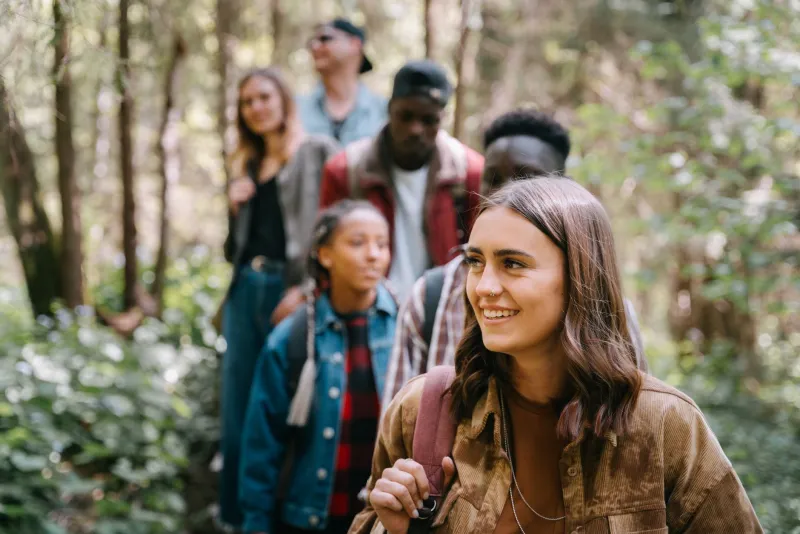
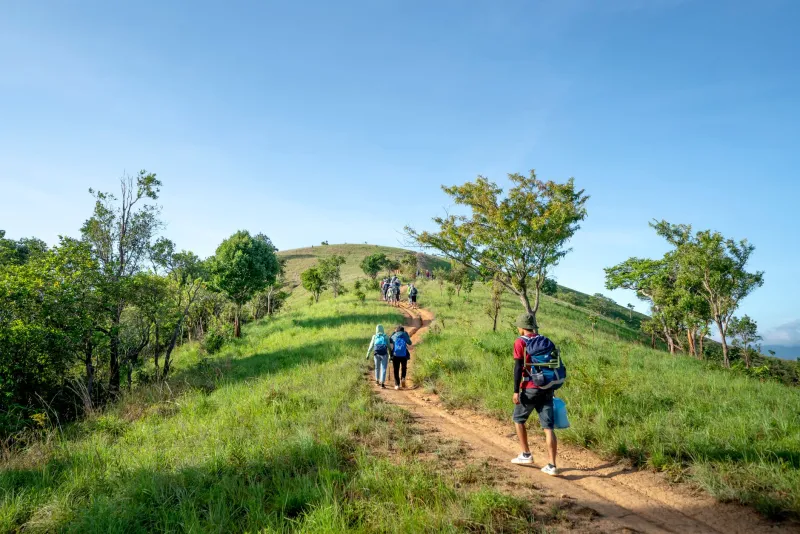
Ask anyone who's been joining the Oxon Walkers 2030 group for more than a few months what they value most about it, and you'll rarely hear them say "the exercise." They'll mention Janet, who always knows which stile leads to the best view. Or Marcus, who brings a thermos of proper tea to every Sunday outing. Or the WhatsApp thread that never really goes quiet, even mid-week when nobody's walking anywhere.
The fitness is real, and the 2030 challenge goals are very much on the table. But something else is happening out there on the Ridgeway and along the Thames Path — something that social scientists have been quietly documenting for years, and that our members have been living without necessarily having the words for it.
What the Research Actually Says
Walking with others isn't just more enjoyable than walking alone. It's neurologically different. Studies from the University of Oxford's experimental psychology department have found that synchronised physical movement — think walking in step, breathing together, navigating the same terrain — triggers the release of endorphins in a way that solo exercise simply doesn't replicate at the same level.
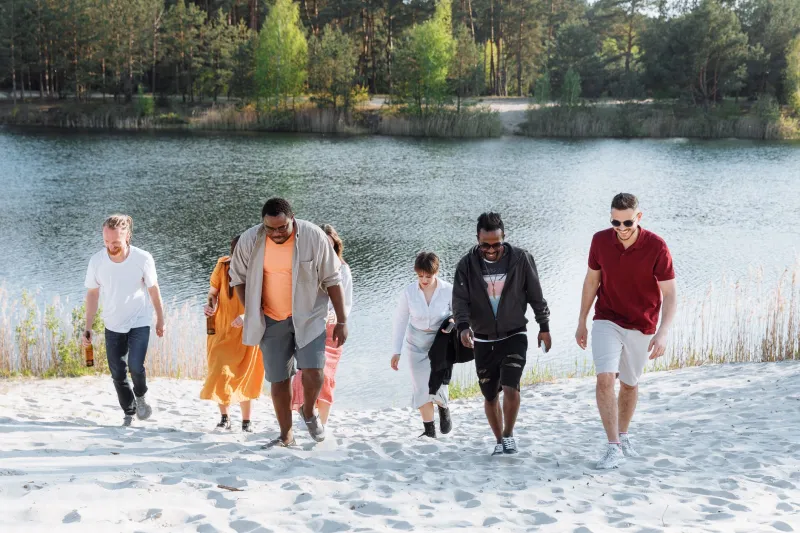
This is sometimes called the "co-activity effect," and it helps explain why group walks tend to produce stronger social bonds than, say, meeting the same people for a coffee. When you're moving through space together, your nervous systems are literally synchronising. You're sharing discomfort (that hill past Boars Hill in February, anyone?), sharing the relief of the flat bit at the top, and sharing the view. That shared emotional arc — even across a two-hour amble — creates a kind of shorthand intimacy that takes much longer to develop in static social settings.
Dr. Emma Seppälä, a researcher in social connection and wellbeing, has described this kind of "doing together" as one of the fastest routes to genuine friendship in adulthood. And if you've ever tried making new friends as a grown-up, you'll know that "fast" is a relative term — it usually takes years.
"I Didn't Expect to Actually Like Them"
Sarah, 47, joined Oxon Walkers 2030 in early 2024 after her GP suggested she needed more regular movement. "I was looking for accountability, honestly," she admits. "I thought I'd turn up, do the walk, go home. I didn't expect to actually like them."
Sixteen months later, she's part of a smaller splinter group that meets on Wednesday evenings for shorter routes around Port Meadow. Three of those Wednesday walkers came to her birthday dinner in March.
That kind of evolution — from structured group activity to genuine, self-sustaining friendship — is exactly what researchers predict when the conditions are right. And group walking, it turns out, creates almost ideal conditions.
There's the regularity (seeing the same faces week after week builds familiarity). There's the low-stakes environment (nobody's performing or being evaluated — you're just walking). And there's what psychologists call "incidental conversation" — the chats that happen not because you sat down to have a meaningful talk, but because you're side by side, looking ahead, and words just come.
"You end up saying things on a walk that you'd never say over a pint," says David, 61, who joined the group after retiring from teaching. "There's something about not making eye contact. It takes the pressure off."
Accountability That Doesn't Feel Like Pressure
One of the quieter benefits of group walking that members mention repeatedly is accountability — but not the anxious, guilt-ridden kind. It's softer than that. It's more like not wanting to miss out.
"I don't drag myself out of bed on a grey Saturday because I've set a fitness goal," says Priya, 38, who joined with her partner in autumn 2023. "I get up because I know Geoff will be there, and he'll have found some ridiculous detour through a field he's convinced is a public right of way. I don't want to miss that."
This matters enormously for the 2030 challenge. Long-term behaviour change — the kind that actually sticks — is far more likely when it's socially embedded. Habits that depend purely on personal willpower tend to erode under pressure. Habits that are tied to relationships, to people you care about, are much more resilient. You can talk yourself out of a solo run. It's harder to ghost your walking group.
Shared Purpose as Social Glue
The 2030 challenge itself plays a role here that's easy to underestimate. Having a collective goal — even a loosely defined one — gives the group a shared narrative. You're not just a collection of individuals who happen to walk together. You're people working towards something, which changes the social dynamic in subtle but meaningful ways.
Research on group cohesion consistently finds that shared purpose accelerates trust and deepens bonds. Sports teams know this. Community projects know this. Oxon Walkers 2030, perhaps without planning it quite this way, has stumbled into the same dynamic.
"We talk about the challenge, compare distances, encourage each other when someone's had a quiet month," says Marcus (yes, the one with the thermos). "It gives us something to care about together, beyond just turning up."
Beyond 2030
The question that comes up more and more as the group grows is: what happens after 2030? The challenge has an end date. The friendships, by all accounts, won't.
"I genuinely can't imagine not walking with these people," says Sarah. "The 2030 thing got me through the door. But the friendships are what'll keep me coming back."
That's perhaps the most important thing the science — and our members — are telling us. The miles matter. The fitness goals matter. But the real achievement of Oxon Walkers 2030 might be something harder to measure and far more enduring: a community of people in Oxford who know each other properly, who show up for each other, and who built all of that one footpath at a time.
If you haven't yet experienced what a group walk can do for your social life, there's only one way to find out. Lace up, show up, and see who you meet.
Oxon Walkers 2030 group walks run every Saturday and Sunday across various Oxford-area routes. New members are always welcome — no experience required, just comfortable footwear and a willingness to chat.