Whose Towpath Is It Anyway? The Quiet Battles Being Fought Along Oxford's Canals
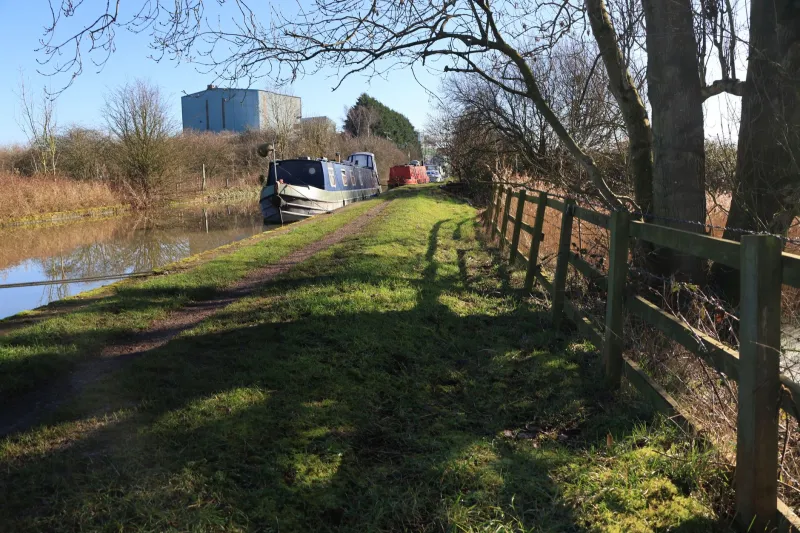
On a grey Tuesday morning in November, the towpath between Hythe Bridge Street and Aristotle Lane is busy in the way that only Oxford manages — cyclists, dog walkers, a student pushing a bicycle with a broken chain, two narrowboats edging past each other with the careful choreography of long experience. It looks, as it always does, like a scene of uncomplicated urban calm.
Look a little closer, though, and the picture gets more complicated.
The stretch of canal running through the heart of Oxford — and the longer Oxford Canal heading north toward Banbury — is the subject of an increasingly active set of disputes about access, maintenance, and the competing interests of the many different people who use it. For walkers, these aren't abstract debates. They're about whether the routes you rely on will still be there next year, and in the same condition.
A Route With Many Owners
The first thing to understand about canal towpaths is that their legal status is more complex than most walkers realise. Unlike footpaths and bridleways recorded on the Definitive Map, towpaths don't automatically carry a public right of way. The Canal & River Trust, which took over management of the inland waterway network from British Waterways in 2012, grants permissive access to most towpaths — meaning they can, in principle, be closed or restricted without the same legal protections that apply to public rights of way.
In practice, the Trust has a strong policy of maintaining open access, and most towpath closures are temporary and maintenance-related. But the permissive nature of that access creates a different dynamic when development interests enter the picture.
Near Jericho, where residential and commercial development has intensified over the past decade, several short sections of towpath have been subject to temporary closures during construction phases. Some of these closures lasted longer than originally stated; some diversions were poorly signed. Walkers who use the route regularly noticed, even if the disruption was rarely significant enough to make headlines.
"The diversions themselves aren't always the problem," says Janet, one of Oxon Walkers' volunteer footpath co-ordinators who monitors canal routes as part of her role. "It's the communication. You turn up expecting a clear path and there's a barrier and a sign pointing vaguely at a field. That's frustrating, and it puts people off using routes they'd otherwise walk regularly."
The Maintenance Question
Separate from development pressure is the longer-running issue of towpath maintenance, which has become a flashpoint in several sections of the Oxford Canal north of the city.
The Canal & River Trust manages over 2,000 miles of waterway with a budget that has been under sustained pressure since its formation. Towpath surfaces — which take considerable punishment from cyclists, horse-drawn boat towing (now rare but still present in places), and general foot traffic — require regular attention that doesn't always materialise.
The section between Thrupp and Shipton-on-Cherwell, a popular walking stretch that connects to the Cherwell Valley path, has had persistent surface issues reported by Oxon Walkers members over the past two winters. Waterlogged sections, subsidence near bridge abutments, and overgrown vegetation reducing the effective path width have all been flagged through the Trust's reporting system — with varying response times.
Peter, who has walked this stretch regularly for fifteen years and serves as an informal local contact for the Canal & River Trust's volunteer programme, is philosophical but direct. "They do respond eventually. But there's a funding gap that's obvious to anyone who uses these paths often. The Trust is doing what it can, but 'what it can' isn't always enough."
The Canal & River Trust, for its part, acknowledges the pressure. In a statement to us, a spokesperson noted that the organisation relies heavily on voluntary income and charitable donations alongside government grant funding, and that prioritising maintenance across such a large network inevitably involves difficult choices.
Boaters, Walkers, and the Space Between
A less discussed but genuinely complex tension exists between the canal's various user communities — and specifically between the growth in continuous cruiser liveaboard boaters and walkers who share the towpath.
The number of people living permanently aboard narrowboats on the Oxford Canal has grown significantly over the past decade, driven in part by Oxford's housing costs. Continuous cruisers — boaters without a permanent mooring who move their vessels regularly — are legally required to cruise to different locations, but the definition of 'different' has been a matter of ongoing dispute with the Canal & River Trust.
For walkers, the practical impact is sometimes significant. Moored boats with generators running, dogs on long leads across the towpath, and the occasional (if rare) confrontational encounter are all reported by members. More structurally, where boats moor in long static lines, the effective width of the towpath can be reduced by gangplanks, ropes, and equipment stored on the bank.
None of this is to cast boaters as antagonists — many are themselves walkers, and the canal community generally has a strong culture of mutual respect. But it illustrates the way that a single, narrow strip of land is being asked to accommodate an increasing number of competing uses.
What Walkers Can Actually Do
The picture isn't bleak, and there are concrete ways that Oxon Walkers members can engage with these issues rather than simply absorbing them.
Reporting path issues to the Canal & River Trust through their online reporting tool (available on the Trust's website) does generate responses, even if not always quickly. Collective reporting — several people flagging the same problem — tends to accelerate action.
Oxfordshire County Council's Public Rights of Way team is the relevant authority for any towpath sections that do carry a recorded public right of way, and they're worth contacting separately for persistent issues.
Nationally, the Ramblers Association and local walking groups have been increasingly active in monitoring canal access and challenging closures that appear to exceed their stated scope. Membership of Ramblers, even for those primarily interested in urban and towpath walking, provides a collective voice that individual complaints don't.
And perhaps most simply: keep walking these routes. Regular use generates the evidence base that makes a case for maintenance investment. A towpath that's demonstrably well-used is harder to deprioritise than one that appears neglected.
Oxford's canals are extraordinary assets — green corridors through the city, connections to the wider countryside, and genuinely beautiful walking routes that most cities would envy. Keeping them that way requires a bit more engagement than simply enjoying them. But that's true of most things worth having.