Just You and the Hills: A First-Timer's Guide to Solo Walking in the Cotswolds
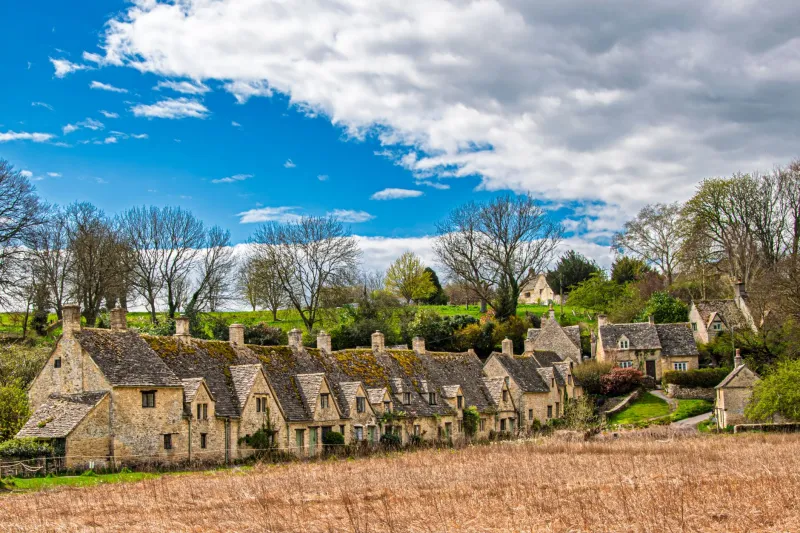
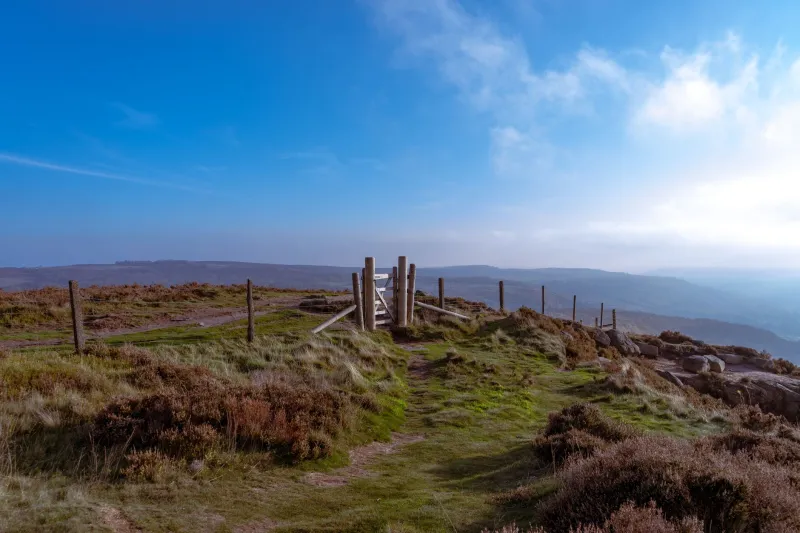
There's a particular kind of quiet that settles over you when you realise the only footsteps you can hear are your own. No one to wait for at the stile. No group decision about which pub to stop at. Just you, a decent pair of boots, and a stretch of Cotswolds limestone rolling away into the distance.
For many members of Oxon Walkers 2030, that moment doesn't come easily. The group walk is a comfort blanket — and a brilliant one at that. But somewhere between the familiar Thames Path circuits and the banter of a Sunday morning ramble, a quiet ambition starts to stir. What if I just... went on my own?
If that thought has crossed your mind, you're in good company. And the Cotswolds — sitting barely an hour from Oxford — is one of the finest places in England to find out what solo walking actually feels like.
Why the First Solo Trip Feels So Daunting
It's worth being honest about this, because a lot of people assume they're the only one who finds it nerve-wracking. They're not.
Sarah, who joined Oxon Walkers 2030 in early 2023 after moving to Oxford from Manchester, spent nearly eight months on group walks before she attempted anything solo. "I kept telling myself I wasn't ready," she says. "I didn't trust my navigation. I worried about what would happen if I twisted my ankle. Honestly, I think I was just scared of being alone with my own thoughts for that long."
That last point is more common than people admit. Group walks come with built-in distraction — conversation, shared decisions, other people's energy. Going solo strips all of that away, and for some walkers, the silence feels like a challenge rather than a reward. The good news is that most people who push through that initial discomfort report that solo walking becomes deeply addictive, very quickly.
Choosing the Right Route to Start
The Cotswolds is ideal for a first solo outing, and not just because it's beautiful. The trail network is well-maintained, the villages are frequent enough to provide natural waypoints and emergency bail-out options, and the Cotswold Way itself is one of the most clearly waymarked long-distance paths in the country.
For a genuine first solo trip, you don't need to tackle the full 102-mile national trail. A one- or two-day section is more than enough to get the feel of independent walking. The stretch between Chipping Campden and Broadway is a popular choice — manageable distances, stunning views from the escarpment, and a proper market town at each end with good transport links back to Oxford.
Alternatively, the circular routes around Bourton-on-the-Water or the Windrush Valley offer a gentler introduction with no need for overnight accommodation if you're not quite ready for that step.
The key rule: choose a route you've partially researched and partially left open. Over-planning can kill the spontaneity that makes solo walking so rewarding.
Navigation: Getting Comfortable Without a Crowd
One of the biggest anxieties for solo first-timers is navigation. In a group, someone always seems to know where they're going. On your own, that someone has to be you.
The honest truth is that basic navigation is a learnable skill, and the Cotswolds is a forgiving place to practise it. That said, a few essentials make a real difference:
- Download offline maps before you leave. Apps like OS Maps or Komoot work without mobile signal, which is more important than you'd think once you're in a valley or behind a limestone ridge.
- Carry the paper version too. OS Explorer maps for the Cotswolds (OL45 and sheets 179, 180, 191) are worth having in your pack. Batteries die. Paper doesn't.
- Learn to read field boundaries and footpath markers. Yellow arrows indicate public footpaths; blue arrows are bridleways. Once you know what to look for, Cotswolds paths become much easier to follow.
Dave, a long-standing Oxon Walkers 2030 member who completed his first solo Cotswolds trip last autumn, admits he got briefly lost near Stanway. "I'd have panicked in the past," he says. "But I stopped, got my map out, worked out where I'd gone wrong, and corrected it. It took about ten minutes. And honestly, sorting it out myself felt like a bigger achievement than reaching the end."
Safety Without the Safety Net of a Group
Solo walking does require a bit more preparation than heading out with a crowd. Nothing elaborate — just sensible habits.
Tell someone where you're going and when you expect to be back. Leave a written note if necessary. Check the weather forecast the night before and again on the morning of your walk — the Cotswolds escarpment can get surprisingly exposed in poor conditions. Carry a fully charged phone, a small first aid kit, and more water than you think you'll need.
A personal safety alarm is a small, cheap addition that many solo walkers — particularly women — find gives them genuine peace of mind. It's not about expecting trouble. It's about removing one more reason to talk yourself out of going.
For longer or more remote routes, consider a basic GPS device or satellite communicator. For Cotswolds day walks, your smartphone with offline maps is almost certainly sufficient.
Finding Your Own Pace — Literally
One thing that surprises almost every solo walker is how differently they walk when no one else is involved. Faster, sometimes. Often slower. Stopping for twenty minutes to watch a kestrel hover above a field, or sitting on a dry-stone wall to eat lunch without anyone suggesting it's time to keep moving.
This is, for many people, the real revelation of solo walking. You discover your own rhythm — and it turns out to be quite different from the rhythm of a group.
Sarah describes it as "learning what kind of walker I actually am, rather than the walker I was in a group." She now alternates between Oxon Walkers 2030 group events and monthly solo trips, and says both feel essential in different ways.
A Few Practical Notes Before You Go
If you're planning your first Cotswolds solo walk from Oxford, a few logistical points are worth knowing. Chipping Campden is reachable by bus from Oxford (via Moreton-in-Marsh by train, then local bus), though services can be infrequent on Sundays — worth checking Traveline beforehand. Bourton-on-the-Water has better bus connections. For overnight trips, the Cotswolds has a good spread of B&Bs, village pubs with rooms, and a handful of bunkhouses along the Cotswold Way.
Book accommodation in advance during peak season (May to September). Shoulder months — March, April, and October — often offer quieter paths, better light for photography, and more flexible accommodation.
The Bit No One Tells You
Here's what most guides leave out: the first solo walk is rarely perfect. You might take a wrong turn. You might arrive at a village to find the tea room shut. You might feel unexpectedly lonely for the first hour, or unexpectedly elated, or both at once.
None of that matters. What matters is that you went.
The Cotswolds has been walked by people finding their feet — literally and figuratively — for centuries. The paths are worn smooth by generations of boots. There's something deeply reassuring about that. You're not the first person to set off a little nervous, and you won't be the last.
Oxon Walkers 2030 exists to get more people outdoors, and that includes getting people outdoors on their own. If you're thinking about it, the hills are waiting. They're very patient.