Stepping Off the Map: Oxford Walkers Take On Their First Peak District Weekend
There's a moment, usually somewhere around Thursday evening, when the nerves properly kick in. You've said yes to the trip, you've booked the accommodation, you've watched approximately fourteen YouTube videos about blister prevention — and now you're sitting in your kitchen wondering whether you've lost the plot entirely.
Several members of Oxon Walkers 2030 know that feeling very well. Earlier this year, a group of twelve walkers — most of them firmly in the intermediate bracket, comfortable on Oxfordshire footpaths but new to serious upland terrain — packed their rucksacks and headed north to the Peak District for a two-day challenge. What they came back with wasn't just sore calves and a decent set of photos. It was something harder to quantify: a genuine shift in what they believed they were capable of.
This is the story of how they got there, and what you'd need to do the same.
Why the Peak District, and Why Now?
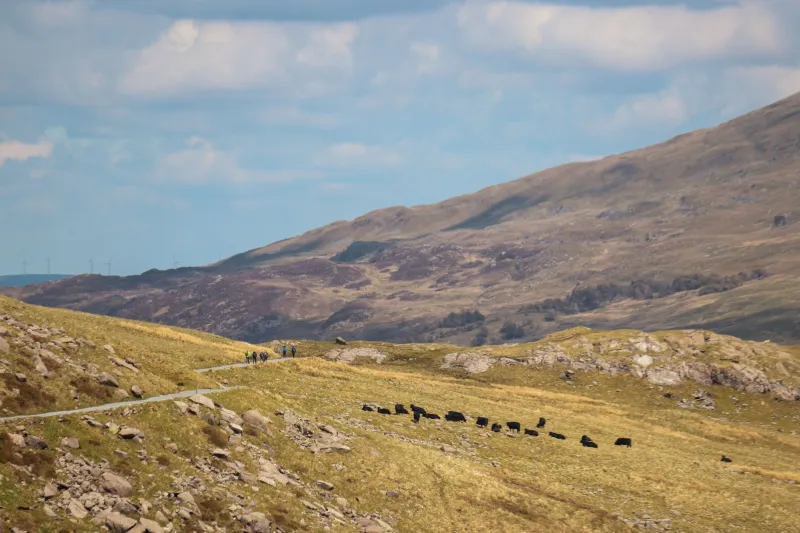
The Peak District is, in many ways, the ideal first big adventure for walkers coming out of gentler countryside. It's accessible — a straightforward drive or train journey from Oxford via Derby or Sheffield — and it offers a huge range of terrain. You can ease yourself in with the rolling limestone dales of the White Peak, or push yourself harder on the gritstone moorland of the Dark Peak. Either way, you're getting something that Oxfordshire simply can't offer: proper elevation, exposed ridgelines, and the very particular satisfaction of earning a view.
For our group, the plan centred on a two-day loop taking in Stanage Edge, the Hope Valley, and a stretch of the Limestone Way. Nothing technically demanding, but at roughly 14 miles per day with several hundred metres of ascent, it was comfortably beyond anything most of the group had attempted before.
The Six Weeks Before: Getting Your Body Ready
Group coordinator Priya, who helped organise the trip, is refreshingly straightforward about what preparation actually looks like. "We didn't ask people to suddenly become athletes," she says. "We just asked them to walk more, and to walk differently."
That meant a deliberate six-week build-up, using the group's regular weekend outings as training ground. Routes around the Chilterns and the North Oxfordshire ridgeway were chosen specifically for their elevation profiles — modest by Peak District standards, but enough to remind people's knees and ankles what uphill feels like. Participants were encouraged to add a mid-week solo walk of four to six miles, and crucially, to do at least two of their training walks in the boots they planned to wear on the trip.
That last point matters more than almost anything else. New boots on a multi-day walk are a recipe for misery. If yours haven't been broken in, start now.
What to Pack (And What to Leave Behind)
There's a particular kind of first-timer mistake that involves packing for every possible disaster. One member of the group — who shall remain nameless — arrived at the minibus with a rucksack that weighed close to eighteen kilograms. By day two, he'd have given a significant amount of money to leave half of it in a hedge.
The sweet spot for a two-day trip, if you're staying in a bunkhouse or B&B rather than wild camping, is somewhere between eight and twelve kilograms. Here's what actually earns its place in the bag:
- Waterproofs — a proper jacket and overtrousers, not a packable cagoule. The Peak District doesn't do half-measures with rain.
- Layers — a base layer, a mid-layer fleece, and something windproof. Mornings on Stanage Edge in April are not mild.
- Navigation tools — OS Map (Explorer OL1 for the Dark Peak, OL24 for the White Peak), a compass, and a fully charged phone with the OS Maps app downloaded offline. Don't rely on signal.
- First aid basics — blister plasters (Compeed, specifically), ibuprofen, and a small bandage.
- Food and water — more than you think. Two litres of water capacity minimum, plus snacks that don't require willpower to eat when you're tired.
- Headtorch — even if you don't plan to walk in the dark. Plans change.
Leave behind the heavy novel, the full-size toiletry bag, and anything you're bringing "just in case" but can't clearly picture using.
The Mental Side Nobody Talks About Enough
Physical preparation is the part people focus on, but the mental adjustment is arguably more significant — especially for walkers who haven't spent much time navigating unfamiliar terrain.
Member Dan, a regular on our Sunday morning Cherwell Valley routes, was candid about his anxiety heading into the trip. "I kept thinking, what if I can't keep up? What if I hold everyone back on a descent and we lose the light?" Those are completely normal worries. What helped, he says, was the group dynamic. "Knowing that other people felt the same way made it feel less like a personal failing and more like just... part of the experience."
This is one of the things a walking group genuinely offers that a solo trip can't replicate. When someone's struggling on a long climb, there's always someone to fall into pace beside them. When the path becomes unclear, there are multiple pairs of eyes on the map. The collective competence of a group is nearly always greater than the sum of its parts.
Priya built in deliberate rest points — not just for physical recovery, but for the group to recalibrate together. "If someone's having a hard moment, a ten-minute stop with a flask of tea does more than any motivational speech."
What the Weekend Actually Felt Like
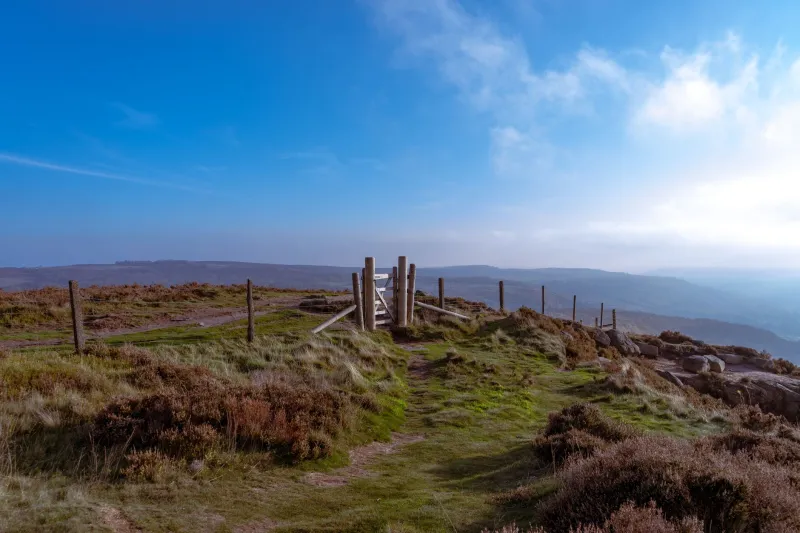
Day one was harder than most people expected. The climb up to Stanage Edge from Hathersage is unrelenting in its early stages, and the wind on the ridge was sharp enough to make conversation difficult. But the view from the top — a vast sweep of moorland in every direction, the gritstone edge dropping away beneath you — was the kind of thing that resets your sense of what's worth doing.
Day two was easier, partly because bodies had adapted and partly because confidence had grown. Navigation felt less daunting. Descents that would have seemed nerve-wracking the day before were taken with something approaching ease. By the time the group reached the cars on Sunday afternoon, the dominant feeling wasn't relief. It was, almost universally, the quiet itch to do it again somewhere bigger.
Your Turn
If you've been walking with Oxon Walkers 2030 for a while and you're starting to wonder whether you might be ready for something more ambitious, the answer is probably yes. The gap between a confident local walker and someone who can handle a multi-day expedition in upland terrain is smaller than it looks — it's mostly a matter of preparation, company, and being willing to feel slightly out of your depth for a day or two.
We're already planning a follow-up trip for later in the year. Keep an eye on the events page, lace up something sturdy, and start breaking those boots in now.