Gear That Earns Its Place in Your Pack: An Oxford Walker's Honest Guide to Trail Tech
There's a particular kind of buyer's remorse that only walkers know. You spot something in an outdoor shop on Cornmarket, or fall down a rabbit hole of five-star reviews online at midnight, and three weeks later you're stuffing a £90 gadget into a drawer because it turned out to be more faff than it was worth. We've all been there.
With the 2030 Challenge pushing more of our members into longer, more ambitious routes, questions about kit and technology come up constantly on group WhatsApps and at post-walk pub stops. So we did something simple: we asked. Over the past couple of months, we spoke to members across all experience levels — from those doing gentle loops around Port Meadow to regulars who've started tackling multi-day routes through the Peak District — about what they actually use, what they regret buying, and what they'd recommend to someone just starting out.
Here's what came back.
GPS Watches: Worth the Investment or Wrist Candy?
The GPS watch category has exploded in recent years, and the price range is dizzying — from under £50 for basic step trackers to north of £500 for devices with full topographic mapping. The honest answer from our members? It depends enormously on the kind of walking you're doing.
"I held off for ages because I thought it was overkill," says Sarah, 47, who's been with Oxon Walkers 2030 since 2022. "Then I did a solo walk through the Chilterns in low cloud and genuinely got turned around. Now I use a Garmin Instinct and I'd never go back. For local routes I barely look at it, but knowing it's there changes how confident I feel."
For casual walkers sticking to well-marked Oxford paths, the consensus is that a mid-range device — something in the £100–£180 bracket — offers plenty of functionality without the learning curve of high-end models. The Garmin Forerunner range and Polar Pacer come up repeatedly as solid, no-nonsense choices.
Where members get frustrated is with watches that promise navigation features but deliver them poorly. "I bought one that claimed full route planning," admits Dave, a retired teacher from Headington. "The maps were so slow to load and the battery died halfway up Mam Tor. Absolute waste. My phone's OS Maps app did a better job."
That point about phones came up again and again.
Apps: The Unsung Heroes of the Modern Walk
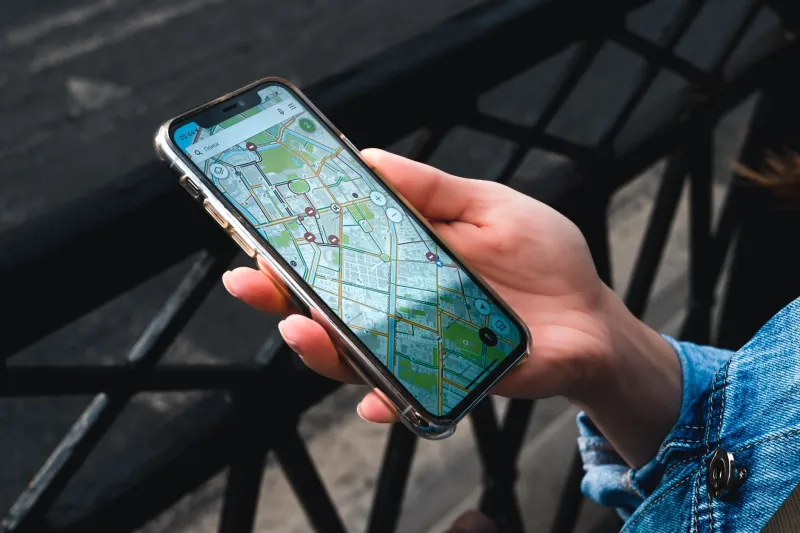
If there's one near-universal recommendation from Oxon Walkers 2030 members, it's the OS Maps app. The Ordnance Survey's digital offering has become the default navigation tool for serious walkers across the UK, and for good reason — it combines the accuracy of traditional OS maps with offline capability, route planning, and live GPS tracking.
"I pay the annual subscription and it's the best £27.99 I spend all year," says Priya, who joined the club last spring and has already completed four weekend walking trips. "You can download maps for the whole of the UK, so even in a dead signal zone in the Brecon Beacons you've got everything you need."
What3Words also gets a regular mention, particularly among members who've thought carefully about safety. It's free, it works offline once downloaded, and it gives emergency services a precise three-word location — something that could genuinely matter in remote terrain.
On the weather side, the BBC Weather app remains stubbornly popular despite the proliferation of more specialised alternatives. Mountain Forecast earns praise for upland routes, but for Oxford's Thames Valley walks, members tend to stick with what they know. "I've tried three different weather apps," laughs Marcus, a group walk leader. "I always end up checking the BBC one anyway."
Step Counters and Fitness Trackers: Motivating or Misleading?
This is where opinions diverge most sharply. Basic fitness trackers — Fitbits, Apple Watch, and their ilk — are genuinely useful motivational tools for some members and largely irrelevant for others.
"My Fitbit got me off the sofa in the first place," says Gill, 58, from Cowley. "Seeing the step count go up was addictive. I know the numbers aren't perfectly accurate but that's not really the point — it kept me moving."
The criticism tends to come from more experienced walkers who find the gamification a distraction. "I stopped wearing mine because I was checking it every five minutes instead of actually looking at the countryside," says Tom, who's been walking seriously for over a decade. "There's something to be said for just walking."
For newer members or those using walking as part of a broader health goal, a basic tracker in the £40–£80 range is probably worthwhile. For anyone already committed to regular group walks, it may add little.
Accessibility Aids: Technology That Really Matters
This is perhaps the area where tech investment pays off most clearly and is least often discussed in mainstream kit guides.
Several of our members walk with conditions that affect balance, stamina, or joint health, and the right aids can be transformative. Trekking poles with ergonomic grips — particularly those with anti-shock mechanisms — come highly recommended for anyone with knee concerns. "I resisted poles for years because I thought they were for older people," admits Richard, 52. "Now I won't walk without them. My knees are a different story entirely."
For members with visual impairments, the combination of OS Maps and a paired Bluetooth earpiece for audio navigation has opened up routes that previously felt inaccessible. And for those managing fatigue conditions, heart rate monitoring — available on most mid-range GPS watches — provides a genuinely useful way to manage effort over longer distances.
The Honest Bottom Line
If you're a casual walker doing local Oxford loops, your smartphone and a decent weather app will see you through most situations. Add a pair of trekking poles if your joints appreciate the support, and download OS Maps before you venture further afield.
If you're pushing into longer or more remote routes as part of the 2030 Challenge, a dedicated GPS watch starts to earn its cost — but buy mid-range, learn how to use it before you need it, and don't let the tech replace your map-reading skills.
And if someone tries to sell you a solar-powered Bluetooth hydration sensor that syncs with your smartwatch to remind you to drink water? Leave it on the shelf. You already know how to be thirsty.
Got a gadget you love — or one you deeply regret? Share your verdict in the club forum or bring it up at the next group walk. We're always comparing notes.